
Same Pattern, Different Century
What I realized watching Victoria… and what it made me question about today

Some things look beautiful at first glance.
Until you look closer.
And realize what it costs to maintain that image.
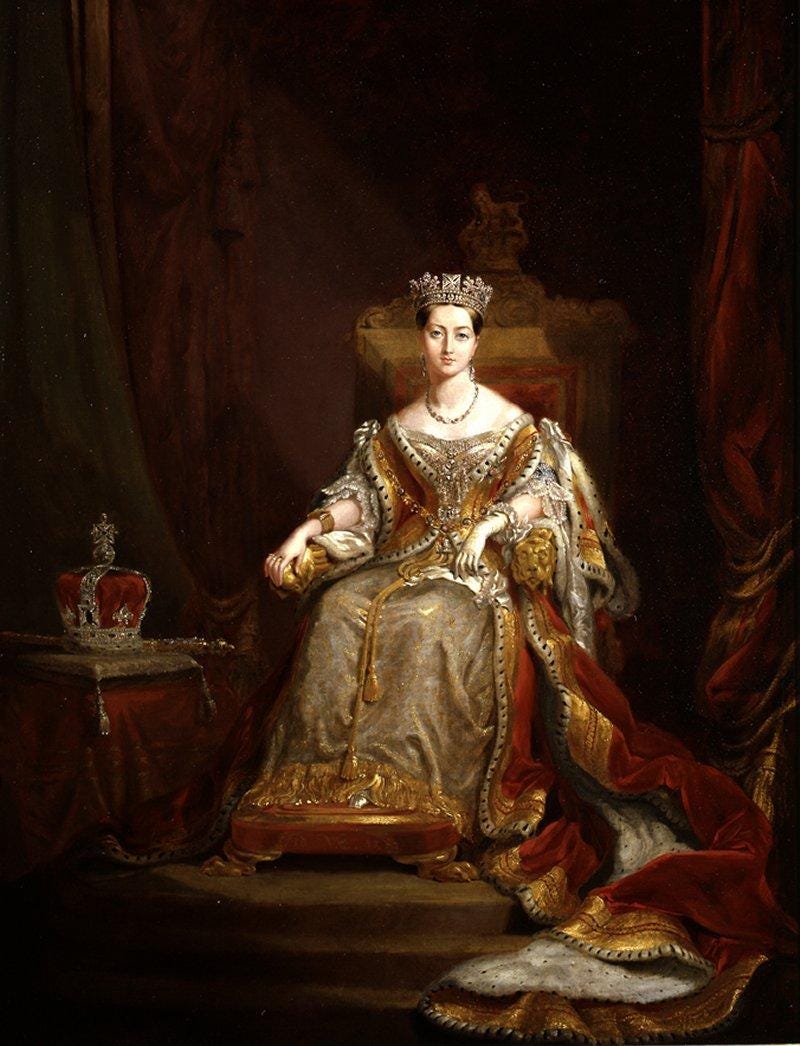
Queen Victoria, Coronation Portrait (1838). Source: Wikimedia Commons.
I recently finished Bridgerton, and I wasn’t ready to leave that world just yet.
So I went looking for something similar. That’s how I ended up watching Victoria on Netflix.
As I watched, I found myself sitting with it longer than I expected.
Victoria is set in the 19th century, following a young queen as she steps into power.
And I can’t lie. I love that era.
The gowns.
The music.
The elegance.
But let me be honest.
There is no way I could live in that time.
Because, as beautiful as it looked, it was restrictive.
Corsets.
Expectations.
Silence.
To be seen but not heard.
To fit a role but not fully be yourself.
It made me realize something.
How something can look so beautiful on the outside…
and still be limited underneath.
Not just in appearance,
But in the way people were treated
depending on who they were,
where they came from,
or where they stood in society.
Let me anchor this.
In America, Black people have never just been one of many groups facing hardship.
We were the system.
The labor.
The foundation on which everything else was built.
So when I talk about patterns across history, I am not forgetting that.
I am starting from it.
Because here, injustice was not accidental.
It was designed.
And what stood out to me while watching Victoria is that even then, people recognized it.
There was a moment where Prince Albert spoke about how Black people were treated in America.
How they were enslaved.
How it was unjust.
And that part stayed with me.
Because it was not just for the story.
Prince Albert spoke out against slavery and supported efforts to end it.
At the time, it was one of the first instances in which someone connected to the monarchy publicly used that level of influence to align with a moral cause like abolition.
Which made me think.
Even when people see something clearly,
even when they have influence,
even when they speak on it,
systems are not easily broken.
The American system of slavery did not end because it was easily undone. Too many fought to keep it in place.
And even now, while it may not look the same, there are still systems that impact marginalized groups.
Which means some things have changed…
And some things still remain.
Women have always led.
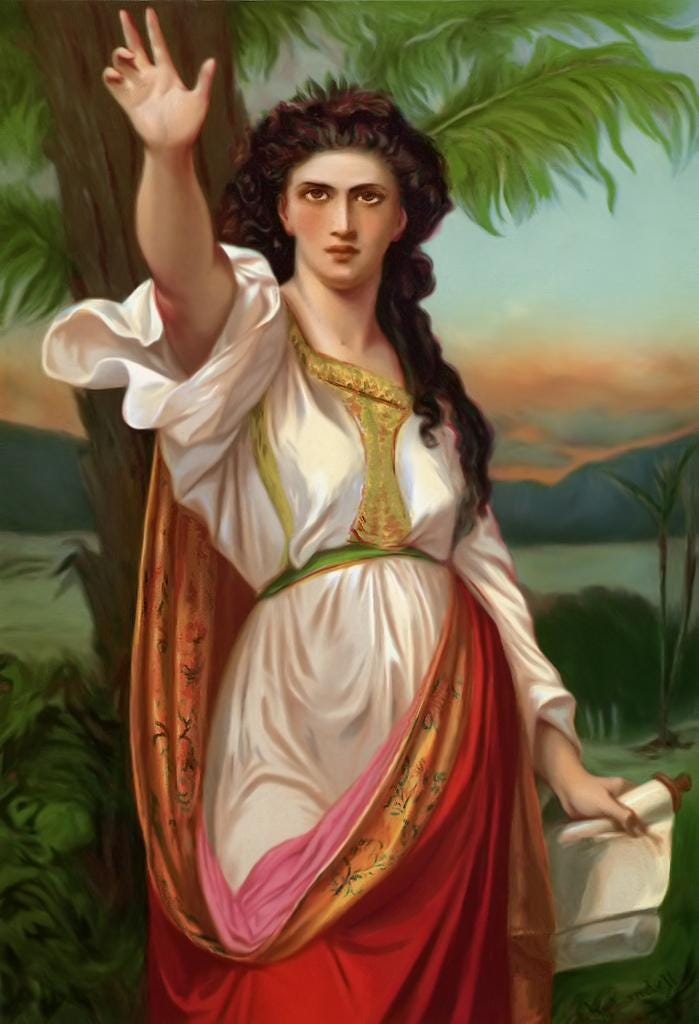
Deborah, a judge and leader in the Bible. Source: Wikimedia Commons.
We debate leadership today. Who should lead? What it should look like.
But history already answered some of those questions.
Queen Elizabeth I ruled for decades
Queen Victoria ruled for over 60 years
Queen Charlotte helped shape a legacy in her time
And long before them, there was Deborah.
A woman chosen to lead. Not because it was expected, but because it was necessary.
And it amazes me.
That women have held positions of leadership throughout history,
and yet we still debate whether a woman should lead at the highest level here in America.
At some point, it becomes clear.
God has never been limited by our expectations.
He can use anyone, and anything, to confound what we think and understand.
And even then, there was a contrast.
Women as a whole were limited,
Yet the queen held authority because of her position and royal bloodline, while other women were still limited by the same system.
And as believers, we are called a royal priesthood.
Yet at times, we still struggle to see each other through that same lens.
God has never been limited by the human mind.
The pattern shows up everywhere.
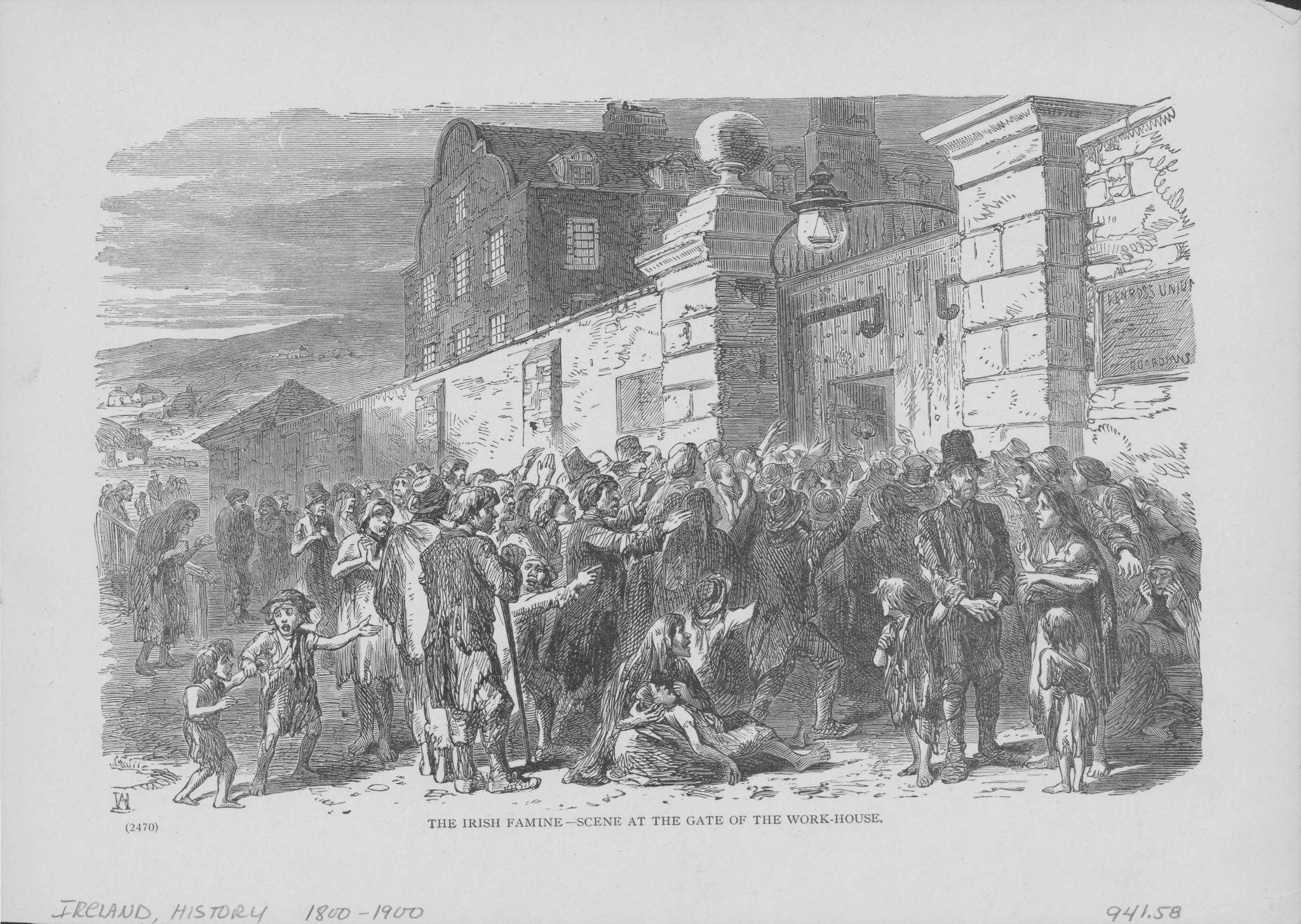
Irish famine survivors during the 19th century. Source: Wikimedia Commons.
Watching Victoria, I saw it again.
People starving.
Families suffering.
And hesitation to help.
Because of bias.
Because of belief.
Because of those people.
Even within the church.
What struck me most is this.
The people who are seen as different are often the first to be dismissed.
What’s leadership supposed to be?
There was a moment that stayed with me.
A man in power said:
I have to put my personal beliefs aside for the greater good of the people.
That is leadership.
Not comfort.
Not control.
Not protecting your own interests.
Leadership is a responsibility.
It is a service.
It is the willingness to make decisions that may not benefit you personally,
But serve the people you are called to lead.
It requires humility.
It requires clarity.
And at times, it requires standing alone.
Because true leadership is not about being agreed with.
It is about doing what is right, even when it is not popular.
At its core, leadership asks a simple question:
What is best for all people?
And history has shown us what happens when leaders choose themselves
over the people they are called to serve.
Power still decides who belongs.
Power does not always look the same across time.
Back then, it looked like crowns and land.
Today, it looks like policies and systems.
The language has changed.
The structure is cleaner.
But the question has not changed.
Who gets to belong
And who gets removed?
Same pattern. Just more polished.
We have technology.
Medicine.
Access.
But sometimes I wonder.
Have we progressed?
Or have we learned how to make the same patterns look acceptable?
As someone who has walked through the medical system, I have had to ask:
Is everything truly designed for people
Or do systems sometimes serve themselves first?
Looking beyond ourselves.
Some countries have stricter guidelines for what goes into food.
Certain ingredients are banned to protect their people.
And when it comes to me, I can’t ignore the connection.
What we eat can affect our health.
Food can make us sick.
And that can lead to hospital visits and medical costs that keep people in debt.
At some point, the question becomes real.
Can I afford the care that keeps me alive…
Or the cost that comes with it?
God’s ways vs. ours.
God’s ways are higher than ours.
He is the creator of all.
He does not choose based on outward appearance.
He looks at the heart.
He looks for those who are willing to follow Him.
He does not force Himself on anyone.
Whosoever will, let them come.
But man?
Man leans on ideology.
Bias.
Prejudice.
And sometimes, we take it a step further.
We try to decide who belongs.
Who is worthy?
Who has access?
Even within spaces meant to reflect Him.
And it is heartbreaking.
To see people rejected, harmed, or even killed
In the name of belief.
Because we were never called to take God’s place.
We were called to be a light.
To lift Jesus up
so that He can draw all people to Himself.
But instead, we often try to stand in His place
and decide who gets to come.
And the truth is…
What would have happened
If God had met us in our own brokenness
and turned us away?
We build systems that divide
and call it order.
What will they say about us?

Modern systems of power still shape how people live. Source: Unsplash.
What will they say about us, if the Lord tarries…
a hundred, even a thousand years from now?
Will they say we were advanced…
But still blind?
That we had access to technology,
information,
and innovation…
and still struggled to take care of people?
What will they uncover that we could not see clearly?
What breakthroughs will they discover?
What answers will we still be searching for?
Will there be cures for things we are still fighting today?
Will they better understand the illnesses that affect so many families?
And will they wonder why some answers took so long to reach?
And will they look back and question the systems we trusted?
Not everything is as simple as it seems.
Not everything is as clear as we would like.
But history has shown us this.
What one generation accepts,
another generation often questions.
And what we overlook,
someone else will eventually examine more closely.?
Maybe this is the question.
Maybe our responsibility is not just to notice what is broken.
Maybe it is to have the courage to challenge the systems that keep it that way.
Not for comfort.
Not for control.
But for the good of all people.
Because basic needs should not be debated.
Food.
Shelter.
Healthcare.
Education.
Those are not privileges.
These are human needs.
History has already shown us what happens when power, belief, and influence are misused.
Even institutions meant to guide people, including the church, have at times caused division instead of healing.
And if history has shown us anything,
it is that systems do not change on their own.
People do.